A Comprehensive Guide to Precision Cutting
In the modern industrial landscape, precision and versatility are paramount. Manufacturers and fabricators are constantly seeking methods that deliver exacting results without compromising material integrity. One such method that has revolutionized the industry is water jet cutting. But for those new to fabrication, the question remains: exactly what is water jet cutting?
At its core, water jet cutting is a non-thermal manufacturing process. It utilizes a high-pressure stream of water to erode a narrow line in a stock material. Because it doesn’t use heat, it is known as a “cold cutting” method.
This unique characteristic makes it essential for creating intricate parts that other methods can’t handle. It often complements other services like professional Welding & Fabrication to create finished industrial products.
How the Process Works
The mechanics behind water jet cutting are fascinatingly simple yet incredibly powerful. The process begins with a high-pressure pump generating immense pressure, often exceeding 60,000 PSI (pounds per square inch). To put that in perspective, it is roughly 30 times the pressure of a standard power washer.
This pressurized water travels through high-pressure tubing to the cutting head. At the cutting head, the water is forced through a tiny orifice, usually made of diamond or sapphire. This creates a supersonic stream focused into a tight beam. This beam acts like a super-sharp, hyper-fast saw blade. For tougher materials, a specialized abrasive is introduced into the stream to increase cutting power.
Types of Water Jet Cutting
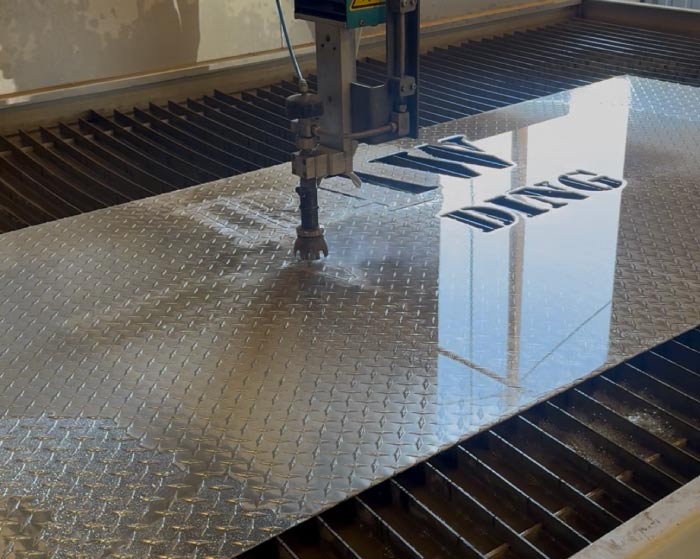
It’s important to understand that there are two distinct methods used in this technology, depending on the application.
- Pure Water Jet: This method uses only pressurized water without added abrasives. It is the original form of the technology. Pure water jets are ideal for softer materials. They are commonly used to cut foam, rubber, plastic, thin gaskets, or food products. It cuts quickly and cleanly without significantly wetting the material.
- Abrasive Water Jet: This is the most common type found in heavy industrial settings. An abrasive material, typically crushed garnet, is fed into the water stream at the nozzle. The water accelerates the abrasive particles, which do the actual cutting. This is necessary for cutting hard substances like thick metals, stone, or composites. It’s a crucial service often used alongside standard Metal Pipe Welding for complex assemblies.
Key Advantages of Water Jet Technology
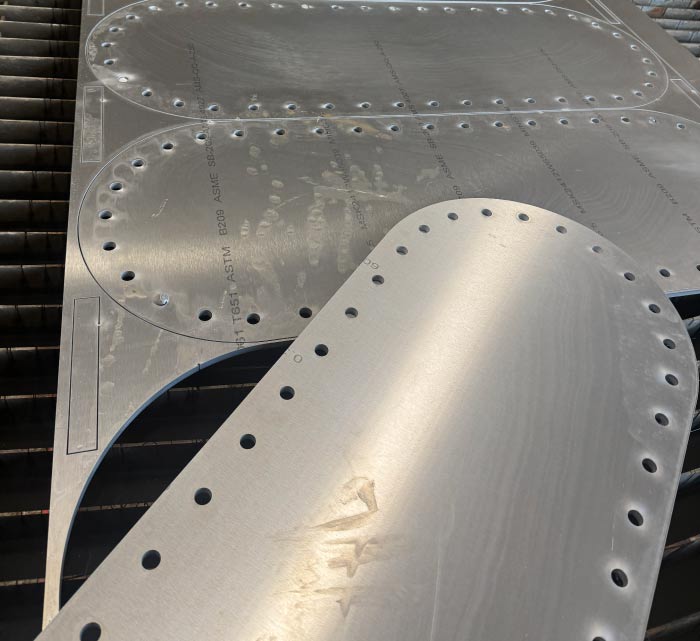
When asking “what is water jet cutting,” you really want to know why it is chosen over laser or plasma cutting. The primary benefit is the lack of heat. Because it is a cold cutting process, there is no Heat-Affected Zone (HAZ).
This means the material’s edges are not hardened, warped, or discolored by extreme temperatures. Furthermore, it offers incredible precision, capable of cutting complex shapes with very tight tolerances. This precision is vital when preparing parts for subsequent assembly or Industrial Maintenance.
Additionally, the process is environmentally friendly. It produces no noxious gases or hazardous vapors during operation. It also doesn’t create dust, making it safer for operators. For those interested in the specific engineering standards of these machines, organizations like the WaterJet Technology Association offer extensive industry insights and technical data.
Materials That Can Be Cut
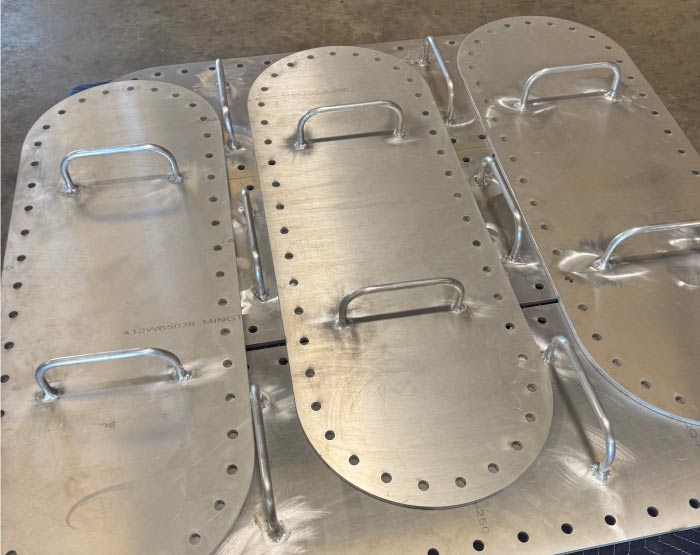
One of the biggest advantages of this technology is its sheer versatility. An abrasive water jet can handle virtually any material without changing the inherent structure of the workpiece.
Common materials processed include:
- Metals: Stainless steel, carbon steel, aluminum, titanium, and copper.
- Stone: Granite, marble, and engineered stone flooring.
- Composites: Carbon fiber and fiberglass.
- Glass: Various types, provided it is not tempered.
- Soft Goods: Rubber, foam, and gasket materials.
Raw Welding Inc.: Your Partner in Precision
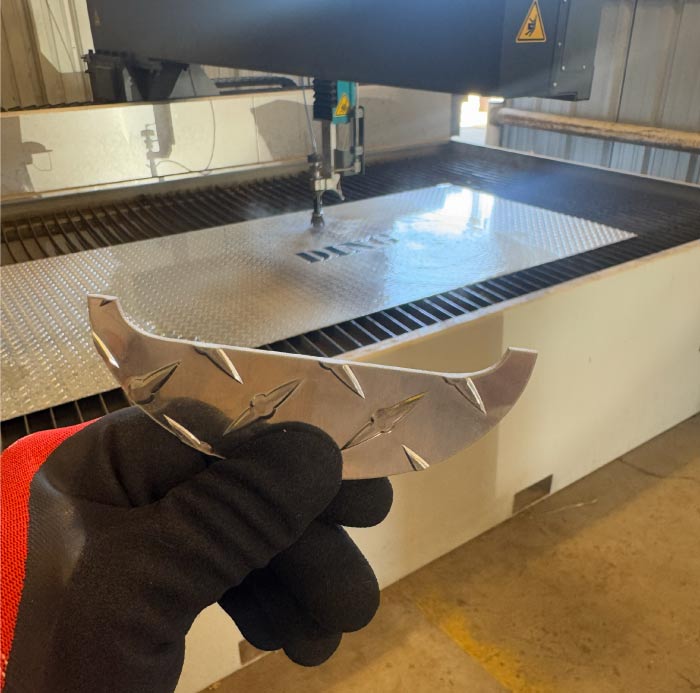
At Raw Welding Inc., we understand that accuracy is paramount in every industrial project. We leverage advanced water jet cutting capabilities to deliver exacting results for our clients.
Whether you need intricate parts for a sudden turnaround or heavy-duty components for a new build, our team ensures accuracy every time. We integrate this service seamlessly with our wider offerings, such as support for major Crane, Turnarounds & Shutdowns.
Raw Welding Inc.: Your Partner in Precision
How thick can a water jet cut?
The thickness capacity depends on the material and the machine’s power. However, abrasive jets can effectively cut metals up to 12 inches thick, though 4 to 6 inches is the most common range for efficient production speeds.
Is water jet cutting as accurate as laser cutting?
Yes, water jet cutting is extremely accurate. Typical tolerances range from ± 0.003″ to ± 0.005″, which is comparable to laser cutting for many applications, but without the heat distortion.
Can you cut tempered glass with a water jet?
No. Because tempered glass is under high internal tension, piercing it with a water jet stream will cause it to shatter instantly into small pieces.
What is the abrasive material used in the process?
The most common abrasive used is garnet. It is a hard, inert, reddish-colored mineral that is highly effective at erosion when accelerated by the water stream.
Does water jet cutting require secondary finishing?
In most cases, no. The process leaves a smooth, uniform edge free of burrs or slag. This often eliminates the need for secondary grinding or machining, saving time and money.